You Don’t Have an AI Problem.
You Have a Decisions Problem.
Most businesses are moving fast with AI — testing tools, automating tasks, launching pilots, and calling it transformation.
But movement is not momentum. Without clarity, AI creates more noise, more risk, and more ways to make the wrong decisions faster.
We help leadership teams put AI in its proper place: inside better decisions. That means defining what to automate, where human judgment is non-negotiable, how decisions are governed, and how the system adapts as conditions change.
Because the businesses that win will not be the ones with the most tools. They will be the ones that think clearest.
The Shift
AI Changed Execution. It Didn't Fix Decisions.
AI made it easier to produce, automate, analyze, and scale. What it did not fix is how leadership teams decide what matters, what to trust, what to act on, and when to change direction.
More tools do not create better judgment. More data does not create better alignment. More automation does not create better strategy.
And as AI scales what your business can do, the cost of unclear decisions scales with it.
The advantage is not who has AI. It is who knows what to do with it.
What Decision Control Unlocks
Better Decisions Compound.
When decisions improve, everything downstream improves: what gets automated, what gets escalated, what gets measured, what gets ignored, and what gets changed.
Lower Risk
Know what should be automated, governed, or escalated.
Faster Decisions
Move with clarity instead of hesitation.
Better Alignment
Give teams a shared way to decide and act.
Stronger Trust
Protect customers, teams, and brand integrity.
Predictable Growth
Build growth from decisions, not guesswork.
Higher Conversion
Turn better signals into better customer experiences.
Growth stops being something you chase. It becomes something you design.
Start With a Decision Control Session.
A focused engagement for leadership teams that are done experimenting and ready to get clear.
Together, we define how AI should operate inside your business — so strategy turns into execution, and execution drives growth that lasts.
You leave with:
-
A clear picture of where AI creates real advantage
-
A practical model for how key decisions should be made
-
A shared view of what to automate, govern, or escalate
-
Leadership alignment on what to do next
-
A stronger foundation for AI-driven growth
No dependency. No theatre. No 200-slide shrine to strategy.
Just clarity, alignment, and control.
About
The Marketing Elephant was built on a belief that has outlasted every technology cycle: the businesses that lead through change are not the ones with the most tools. They are the ones with the clearest thinking.
We help leadership teams cut through complexity, adapt before change becomes a crisis, and build growth systems grounded in sound decisions.
Our work sits at the intersection of strategy, technology, customer experience, and ethical AI. Not ethics as a statement. Ethics as a practical part of how systems make decisions, escalate risk, protect trust, and serve customers.
Like the elephant, we remember what works. We move with precision. We do not mistake activity for progress. And we do not let urgency replace judgment.
AI is the current wave. Our answer is the same as always: better decisions, built to last.

Ready to Get Clear?
That is not an AI problem. That is a decisions problem.
And it does not get better by adding more tools, running more experiments, or waiting for the perfect moment. It gets better when leadership decides to get serious about how decisions are actually made.
That is the conversation we are built for.
Growth is not something you chase. It is something you design.
No decks. No proposals. Just a focused conversation about your business.
What We Do
We Design How Decisions Get Made.
How It Works
Four steps. No theatre. Built for the real world your team operates in.
How Decision Control Becomes a Growth Engine
Not more tools. Not disconnected experiments. Not another strategy deck that dies quietly in a folder.
We Design How Decisions Get Made.
We work with leadership teams to define how AI should operate inside the business: what gets automated, where judgment stays human, how governance works, and how the business adapts when conditions change.
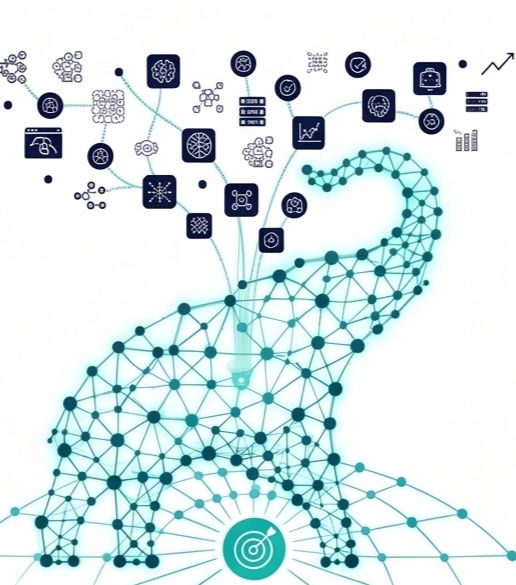
This is Decision Control: human judgment starts the process, AI identifies patterns, automation scales what becomes repeatable, and governance keeps the business in control.
That is how your business moves from reaction to direction — from experimentation to alignment, from AI activity to AI-driven growth.
Because AI does not create advantage on its own. Better decisions do.
How It Works
How Decision Control Becomes a Growth Engine
Four steps. No theatre. Built for the real world your team operates in.
What We Do
01 — Define What Matters
Most businesses do not have a clarity problem. They have a focus problem. We identify where decisions are breaking down, where AI can create real advantage, where it introduces risk, and what is worth solving now versus later. Most organizations try to fix everything at once — and improve very little. Outcome: A clear map of the decisions that matter most.
02 — Design How Decisions Work
This is the step most teams skip. It is also why most AI initiatives struggle. We define what inputs matter, how decisions should be made, what gets automated, and where judgment must stay human. At first, human teams assess the context: what matters, what carries risk, what requires nuance, and what should never be left to automation alone. AI then surfaces recurring signals, hidden gaps, customer needs, operational risks, and decisions that are becoming predictable. Over time, repeatable decisions become system-led. Complex, sensitive, or high-value decisions stay human-led. Outcome: A decision model your leadership team can actually follow.
03 — Align Systems to Decisions
The goal is not more technology. The goal is the right technology doing the right job. We assess how your current systems, workflows, and tools support decision-making: what is disconnected, what is underused, what creates friction, and what is genuinely missing. Technology should follow strategy. Not the other way around. Outcome: Systems aligned to decisions. Less complexity. More value from your existing tools.
04 — Apply & Adapt
Strategy that does not execute is not strategy. It is expensive documentation. We work with your team to apply the decision system in real scenarios — so decisions are made consistently, teams know when to automate or escalate, and the system evolves as conditions change. The goal is to teach the system what good judgment looks like, automate what becomes repeatable, and protect what still needs human oversight. We do not build dependency. We build control. Outcome: A team that can adapt without starting from scratch.
Applications
Where Decision Control Changes Outcomes
The same problem shows up differently in every industry. AI gets added. Tools multiply. Data expands. But unless the business defines how decisions should work, the result is often more noise — not better performance.
Here is what changes when AI is connected to the right decisions, the right human judgment, and the right systems.

Customer Experience
From Support Loops to Real Resolution
Where things break: AI agents are deployed to improve efficiency, but customers end up trapped in repetitive loops. They ask a specific question, get a generic answer, ask again, and escalate anyway. The business automates movement, but not resolution.
What changes: Customer questions become intelligence. Every query becomes a signal: what customers are confused about, what information is missing, what language they use, and which issues should be automated versus escalated.
At first, human teams review the patterns, validate answers, identify content gaps, and assess risk. Over time, repeated questions become automated responses, while complex or sensitive cases stay human-led.
The experience also adapts by format. Some customers need text. Others need a video, walkthrough, community answer, help article, or visual guide.
What becomes possible: Faster resolution, smarter support content, increasingly automated routine issues, and human agents focused on complex cases.
The result: support moves from repetitive escalation to intelligent resolution.

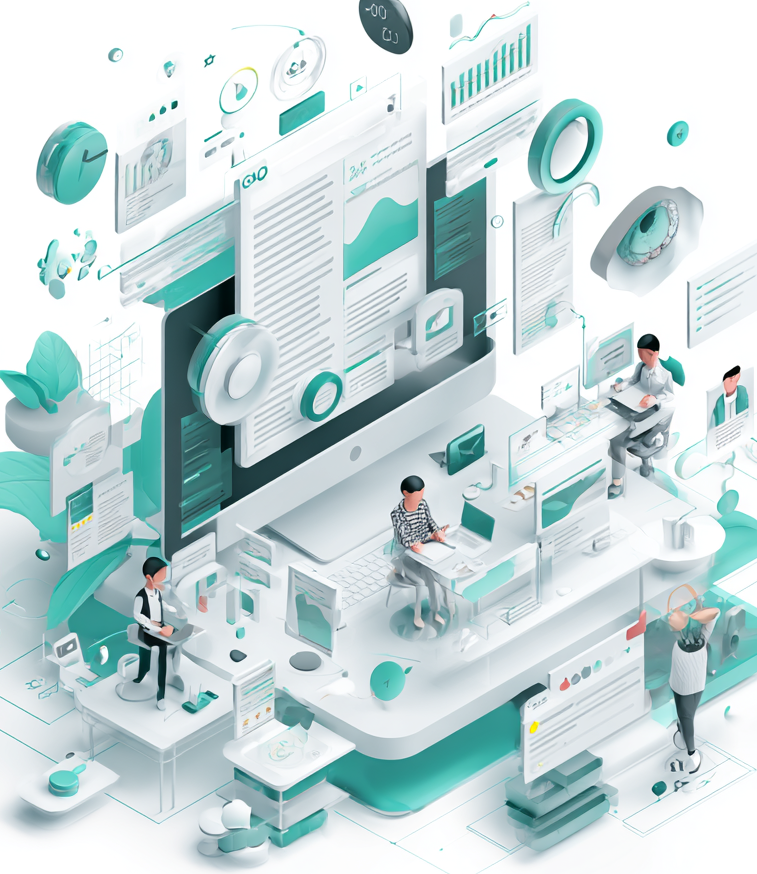


The pattern is the same. Human judgment starts it. Automation scales it.
The real questions are: what decision are we trying to improve, what information should shape it, what should AI identify, what can become automated over time, where does human judgment stay in control, and how does the system learn from what happens next?
That is where AI becomes useful — not as another tool, but as part of a better way to think, decide, and grow.
The problem is not access to AI. The problem is control over how AI is used.
95%
fail to reach sustained business impact
MIT NANDA, 2025
50%
abandoned after proof of concept
Gartner, Jan. 2026
40%+
expected to be cancelled by 2027
Gartner, Jun. 2025
Sources: MIT NANDA, The GenAI Divide: State of AI in Business 2025; Gartner, Why 50% of GenAI Projects Fail — And How to Beat the Odds, Jan. 2026; Gartner, Agentic AI Projects Cancellation Forecast, Jun. 2025